




Don’t Believe Your Ears: How to Spot a Deepfake Before It Costs You
We’ve all seen the movies where a master of disguise puts on a realistic mask to sneak into a vault. It used to be science fiction. But today, that “mask” is digital, it’s incredibly easy to make, and it’s being used to target people just like you every single day. It’s called a Deepfake. Using […]

By Michael Y. Daniels
December 18, 2025
We’ve all seen the movies where a master of disguise puts on a realistic mask to sneak into a vault. It used to be science fiction. But today, that “mask” is digital, it’s incredibly easy to make, and it’s being used to target people just like you every single day.
It’s called a Deepfake. Using Artificial Intelligence (AI), a person can now mimic the face and voice of almost anyone, your CEO, your manager, or even a teammate, well enough to fool almost anyone. They don’t need to be a computer genius to do it; they just need a few minutes of audio or video, which most people have sitting right on their LinkedIn or social media profiles.
The Phone Call from “The Boss”
Imagine you get a call on a busy Tuesday. It’s your boss’s voice. They sound stressed. They tell you they’re in a meeting and forgot to authorize an urgent payment to a new vendor. They need you to do it right now or the company will lose a major contract.
You recognize the voice. You recognize the way they talk. You want to be helpful, so you hurry to get it done.
This is exactly how companies are losing millions. The “boss” on the phone was actually a computer program being controlled by a scammer. They are betting on the fact that you’ll be too nervous or too rushed to stop and think.
Why Your Gut is a Security Tool
The good news is that humans have a natural “BS detector.” Even the best AI usually leaves tiny clues that something isn’t right. We just have to train ourselves to look for them.
When you’re on a video call, look for the “glitches”:
- The Eyes: Does the person blink naturally? Do their eyes seem to be looking in a slightly different direction than their face?
- The Edges: Look at their chin or their hair. Does it look a little blurry or “fuzzy” when they move?
- The Background: Sometimes the person looks perfect, but the background behind them seems to warp or wiggle slightly.
When you’re on a phone call, listen for the “stumbles”:
- The Rhythm: Does the person sound a bit like a GPS, perfectly clear, but without any real emotion or natural “ums” and “ahs”?
- The Delay: Is there a strange one-second pause after you speak before they respond?
Building a “Safe Word” for Your Team
Since we can’t always trust our eyes and ears anymore, we have to trust our processes.
Think of it like a secret handshake. In a truly educated workplace, no one should be afraid to double-check. Here are three simple rules every team should follow:
- The “Callback” Rule: If you get a weird request for money or data, hang up. Call that person back on their actual office phone or a number you already have saved. Don’t use the number they called you from.
- The Team Safe Word: Many teams are now picking a random word, something like “Blueberry” or “Hammock” that they only use when a request is actually real and urgent. If the caller doesn’t know the word, the conversation is over.
- The “Slow Down” Policy: Scammers love urgency. If someone is pushing you to skip the normal rules because it’s an “emergency,” that is the biggest red flag of all. A real boss will never fire you for following the security policy.
Guards on the Front Line of AI
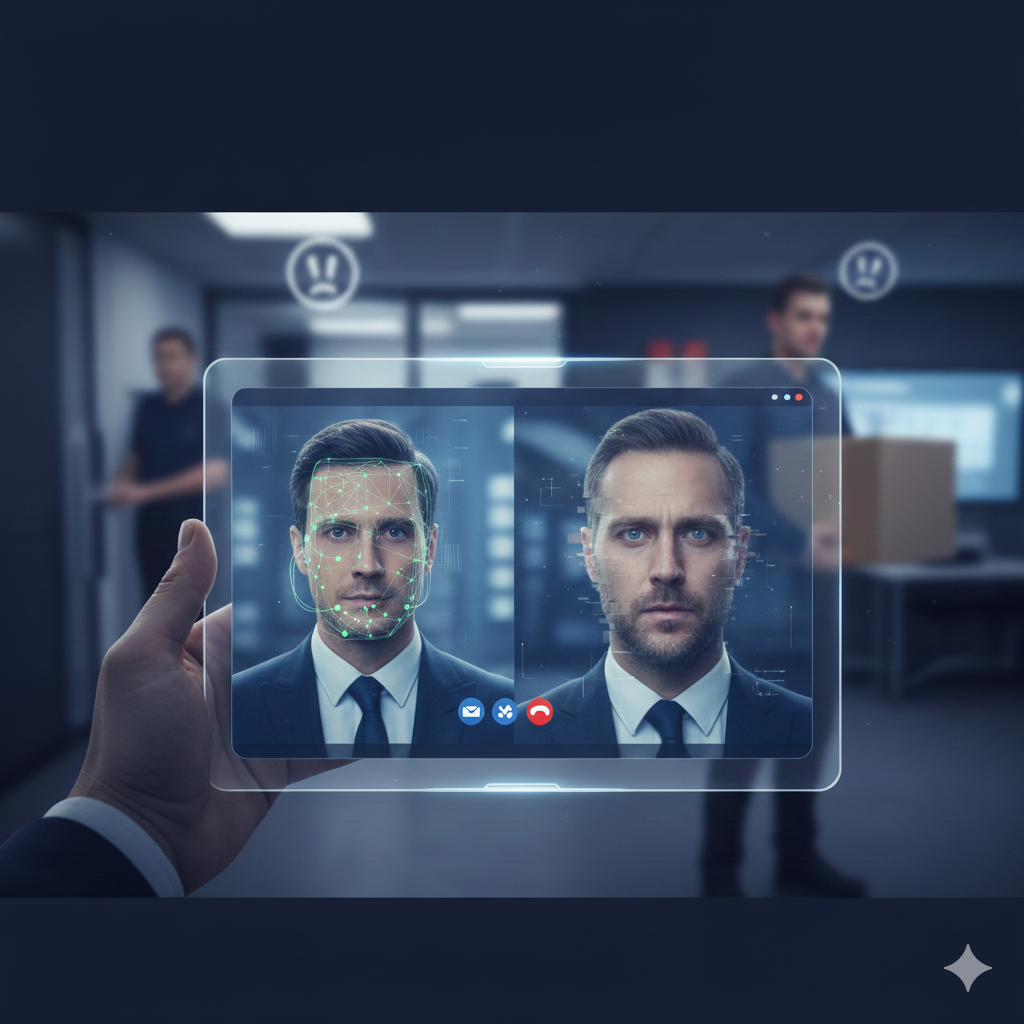
This isn’t just an office problem; it’s a physical security problem too. Imagine a person walking up to a security gate, holding up a phone with a “video call” from the facility manager authorizing them to enter.
Your physical security team needs to be just as sharp as your IT team. They need to know that a face on a screen isn’t proof of identity. To keep a team this sharp, they need to be organized and well-trained. When you are looking for ways to keep your physical team in sync with these modern threats, check out thecityguards.com in your list of security guard and scheduling software. It helps ensure your guards have the right briefings and schedules to stay alert, so they aren’t caught off guard by a digital trick.
You Are the Shield
At the end of the day, AI is just a tool. It can mimic a voice, but it can’t mimic your common sense. If a request feels “off,” it probably is.
Being a “Human Firewall” means having the courage to hit the pause button. It means being the person who says, “I know this sounds like you, but I’m going to call you back on your office line just to be sure.”
That one-minute phone call could be the only thing standing between your company and a total disaster.
Related Posts
Training
Prevent costly mistakes and liability with a structured security guard training program. Learn how to set role-specific outcomes, choose the right training formats, and keep certifications organized for maximum compliance and client trust.
By Catherine Shannon
August 7, 2025
Business Growth
As a security company owner, you are encouraged by the growing demand for security services. Security concerns are on the rise, and all types of security are in high demand everywhere. You are proud of the company product you offer. You have assembled and trained great security personnel for your clients. Your company could be […]
By David Kerolles
August 16, 2023
Security Guards
Business owners know that security is a serious investment- whether they’re hiring in-house staff or contracted private security personnel. But understanding the legal aspects of hiring security guards is crucial. All hiring decisions can involve licensing, liability or labor law compliance issues. So when business owners make missteps, this can result in lawsuits, fines or […]
By Catherine Shannon
May 20, 2025