





Redefining Access Control: From Keys to Biometrics and Beyond
Robots are not just coming,they’re already here, reshaping jobs across America. Cities like Detroit, Pittsburgh, Seattle, and Houston stand at the forefront of this transformation.

By Michael Y. Daniels
September 10, 2025
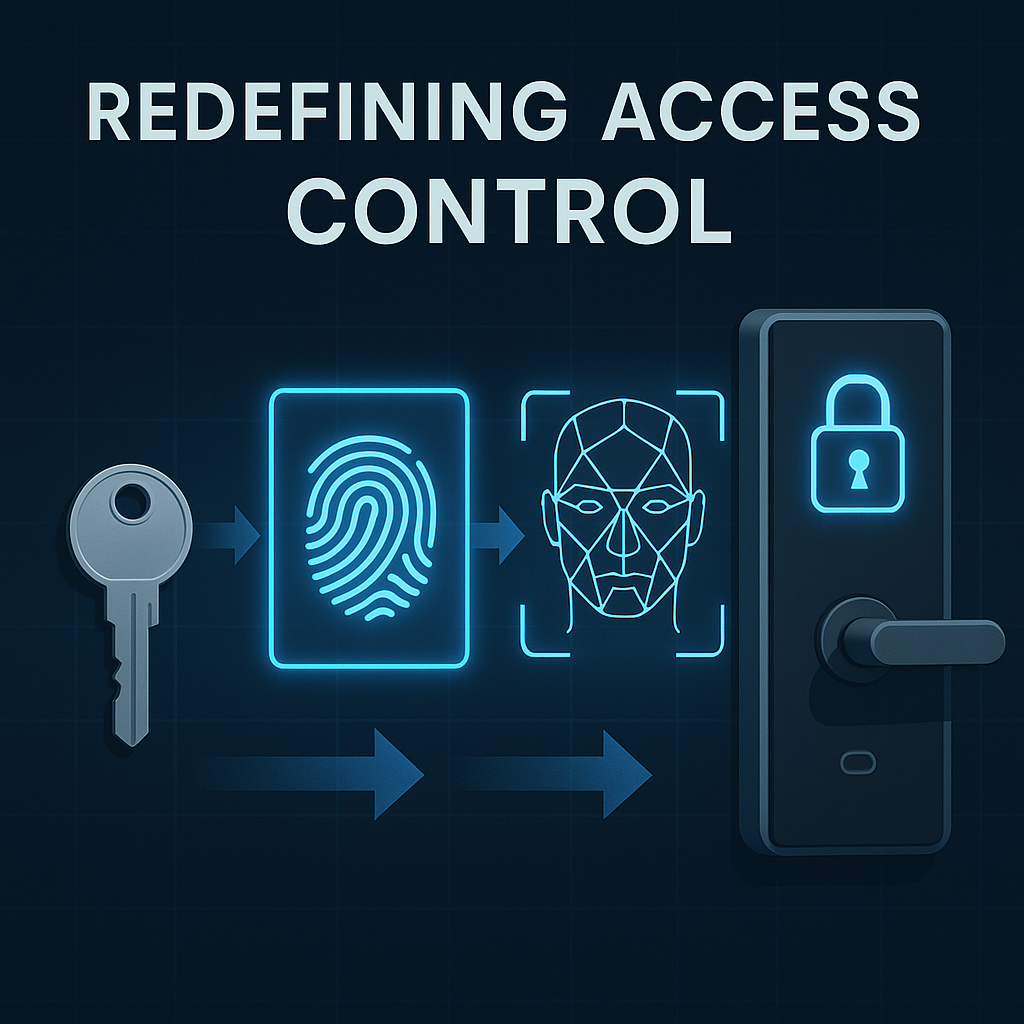
For centuries, access control has shaped how people protect property, information, and identities. From the simple lock-and-key system to advanced biometric authentication, the evolution of access control reflects society’s need for stronger security, convenience, and adaptability. Today, businesses, governments, and individuals alike are moving beyond physical barriers and into intelligent, digital ecosystems of trust.
In this article, we’ll explore how access control has transformed over time, the latest innovations driving the shift toward biometric and digital systems, and what the future holds for security in an increasingly connected world.
The Historical Roots of Access Control
The Age of Keys and Locks
Locks and keys have been humanity’s go-to access control method for thousands of years. Ancient civilizations like the Egyptians and Romans used rudimentary wooden and metal locks to secure property.
- Advantages: Affordable, simple, and easy to use.
- Limitations: Keys could be lost, duplicated, or stolen, and locks offered limited resistance to tampering.
The Rise of Mechanical Safeguards
By the 19th and 20th centuries, mechanical safes, combination locks, and master key systems offered new layers of control. These innovations were particularly common in banks, hotels, and large estates.
The Digital Revolution: Keycards and PINs
Electronic Access Control Systems (EACS)
The mid-to-late 20th century introduced keycards, magnetic stripes, and PIN-based entry systems. These technologies were groundbreaking because they:
- Enabled centralized management of access rights.
- Reduced reliance on physical keys.
- Allowed audit trails to monitor entry and exit activity.
However, these systems had vulnerabilities: keycards could be cloned, PINs could be guessed, and reliance on physical credentials still posed risks.
Integration with IT Infrastructure
As businesses digitized, access control systems became integrated with IT networks, enabling organizations to manage physical and digital access together.
The Biometric Era
Why Biometrics Are Taking Over
Biometric authentication — using unique human traits like fingerprints, facial recognition, and iris scans — is rapidly replacing traditional credentials.
- Strengths: Difficult to forge, highly convenient, and enables seamless user experiences.
- Weaknesses: Privacy concerns, potential data breaches, and errors in recognition (false positives/negatives).
Common Biometric Solutions
- Fingerprint Scanners – widely used in smartphones and office buildings.
- Facial Recognition – popular in airports, law enforcement, and mobile devices.
- Iris and Retina Scans – highly accurate, though more expensive.
- Voice Recognition – increasingly used in call centers and smart devices.
Beyond Biometrics: The Future of Access Control
Multi-Factor Authentication (MFA)
The most secure systems combine something you have (a keycard), something you know (a PIN), and something you are (biometric data). MFA reduces reliance on a single point of failure.
Artificial Intelligence and Behavioral Biometrics
Future systems may authenticate users not just by their face or fingerprint, but by analyzing patterns of behavior such as typing rhythm, walking gait, or even smartphone usage habits.
Cloud-Based Access Control
Modern platforms allow administrators to manage permissions remotely via cloud dashboards, improving scalability and flexibility for organizations.
IoT Integration
Smart locks, wearable devices, and connected security ecosystems are reshaping how individuals interact with access control systems at home and at work.
Challenges and Considerations
Privacy and Ethical Concerns
Biometric data is sensitive, and misuse can have severe consequences. Regulations like GDPR and CCPA emphasize the need for responsible handling of personal information.
Cybersecurity Threats
As access control systems become more digital, they are increasingly vulnerable to hacking, ransomware, and insider threats.
Balancing Convenience and Security
The future of access control must strike a balance between ease of use and robust protection.
Practical Applications Today
- Corporate Offices – hybrid access combining keycards, biometrics, and mobile credentials.
- Hospitals – ensuring only authorized staff access sensitive areas.
- Airports and Borders – biometric-based passport control.
- Smart Homes – mobile apps and voice assistants managing locks and entry points.
Conclusion
The journey from keys to biometrics — and soon to AI-driven behavioral recognition — illustrates how access control continually adapts to changing needs. While challenges such as privacy and cybersecurity remain, the future promises systems that are smarter, safer, and more user-friendly.
Access control is no longer just about keeping intruders out. It’s about creating trust, enabling seamless experiences, and redefining security in the digital age.
FAQ Section
Q1: Are biometrics safer than traditional access methods?
Biometrics offer stronger protection against duplication, but they also come with privacy risks and must be safeguarded against hacking.
Q2: What is the difference between authentication and access control?
Authentication verifies identity, while access control determines what resources that identity can access.
Q3: Can access control systems be hacked?
Yes. While modern systems are more secure, they are still vulnerable to sophisticated cyberattacks if not properly configured.
Q4: What industries benefit most from biometric access control?
Airports, hospitals, banks, and government facilities are among the biggest adopters.
Related Posts
Training
Prevent costly mistakes and liability with a structured security guard training program. Learn how to set role-specific outcomes, choose the right training formats, and keep certifications organized for maximum compliance and client trust.
By Catherine Shannon
August 7, 2025
Safety
Discover the safest areas to stay in Paris. Learn about the best neighborhoods, arrondissements, and districts to ensure a secure and enjoyable visit to the City of Light.
By David Kerolles
July 10, 2025
Safety
Smart Security & Homelessness: A Safer Urban Future A surge in homelessness across the U.S. has escalated into a multidimensional crisis far beyond housing alone posing major public-safety challenges. With law enforcement at capacity, municipalities and businesses are increasingly turning to private security patrols and virtual-guarding technologies to offset resource strains and support unsheltered populations. […]
By Leila Monroe
July 1, 2025