


Campus Security: What’s Needed to Provide Better Surveillance
How to improve campus security with better surveillance.
By Chrissy
October 1, 2025
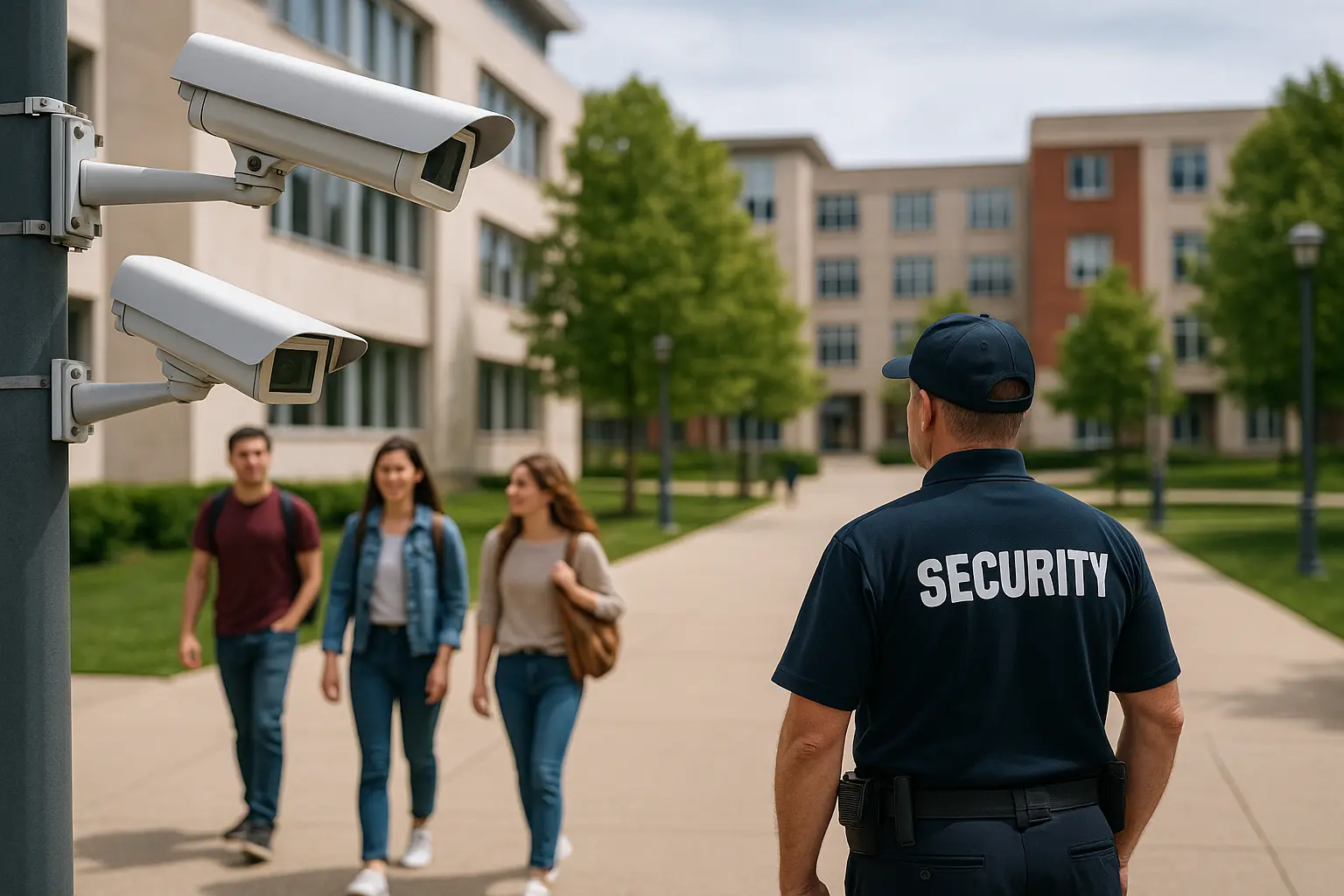
Campus environments are meant to be safe spaces for learning, growth, and community. Yet, rising concerns about theft, vandalism, harassment, and even active threats have put campus security under the spotlight. Parents want reassurance, students want safety, and administrators face pressure to balance security with privacy.
One of the most effective tools available is surveillance but simply installing cameras isn’t enough. True safety requires a combination of technology, policies, and human engagement.
The Current State of Campus Surveillance
Most schools and universities already use some form of security camera system. However, the effectiveness often depends on:
- Coverage gaps – Cameras may not cover parking lots, remote walkways, or dorm entrances.
- Outdated technology – Grainy footage and poor night vision reduce usability.
- Limited monitoring – Systems that record but aren’t actively monitored provide little real-time protection.
- Privacy concerns – Over-surveillance can create distrust among students and faculty.
What’s Needed to Improve Campus Surveillance
1. Modern Camera Technology
- High-definition (HD) and 4K cameras for clear footage.
- Infrared night vision for after-dark safety.
- Wide-angle and PTZ (pan-tilt-zoom) cameras to reduce blind spots.
- AI-powered video analytics to detect unusual behavior or loitering.
2. Integrated Security Systems
A strong surveillance network isn’t just cameras—it’s integration.
- Access control systems linked with cameras at entry points.
- Alarm systems that trigger instant recording.
- Emergency communication systems that connect security staff directly with students.
3. Real-Time Monitoring
- Employ dedicated security staff to watch live feeds.
- Use AI alert systems to notify personnel of suspicious activity instantly.
- Establish 24/7 monitoring centers in larger campuses.
4. Data Security & Storage
- Store video footage securely with encryption.
- Adopt cloud storage for scalability and remote access.
- Define clear retention policies for recorded footage.
5. Community Engagement & Awareness
- Encourage students to report suspicious behavior.
- Offer safety workshops to explain how surveillance protects the community.
- Balance privacy and security by being transparent about camera placement and usage.
6. Security Guards and Human Presence
Technology alone can’t guarantee safety. Having trained security guards on campus ensures:
- Immediate response during emergencies.
- Visible deterrence — a uniformed presence discourages potential wrongdoers.
- Personal assistance — students often feel more comfortable approaching a guard than relying on a camera.
- Community connection — guards build relationships with students, adding a human element to security.
For best results, campuses should integrate surveillance with on-the-ground personnel. For example, cameras can alert guards to suspicious activity, allowing them to respond faster.
Potential Challenges and Ethical Concerns
Better surveillance improves safety, but it comes with challenges:
- Privacy concerns: Students may feel watched constantly.
- Data misuse risks: Poor handling of video data can lead to leaks.
- Budget constraints: Not all institutions can afford cutting-edge systems.
- Over-reliance on technology: Cameras can’t replace human presence, like security officers and peer safety programs.
Practical Steps for Administrators
- Conduct a security audit – Identify blind spots and vulnerabilities.
- Engage stakeholders – Involve students, parents, and staff in decision-making.
- Invest in training – Security staff should know how to use new technologies effectively.
- Update policies – Clear guidelines on data privacy, monitoring, and reporting procedures.
- Plan for scalability – Choose systems that can expand as the campus grows.
Conclusion: A Safer Future for Campuses
Improving campus surveillance isn’t just about more cameras—it’s about smarter, more ethical, and more community-focused systems. When campuses integrate advanced technology with transparency and human vigilance, they create an environment where students can thrive without fear.
👉 Safety isn’t just a policy; it’s the feeling that lets students focus on their education instead of looking over their shoulders.
FAQs
Q1: Do security cameras actually prevent crime on campus?
Yes, studies show visible surveillance reduces theft, vandalism, and misconduct. However, prevention is strongest when cameras are combined with community policing and student awareness programs.
Q2: How do campuses balance surveillance with student privacy?
By being transparent about camera placement, limiting footage access, and creating strict policies on data retention.
Q3: What’s the most cost-effective way to improve surveillance?
Start with upgrading outdated cameras in high-traffic areas like entrances, dorms, and parking lots before expanding to full integration systems.
Q4: Should smaller schools also invest in advanced surveillance?
Yes, even small campuses benefit from affordable modern options like cloud-based systems and AI-powered alerts.
Related Posts
Safety
We’ve all seen the movies where a master of disguise puts on a realistic mask to sneak into a vault. It used to be science fiction. But today, that “mask” is digital, it’s incredibly easy to make, and it’s being used to target people just like you every single day. It’s called a Deepfake. Using […]
By Michael Y. Daniels
December 18, 2025
Safety
Not that long ago, retailers only used front-line retail employees- armed solely with cash registers- to ring up customer’s purchases. But no longer- workplace technologies have rapidly evolved from an employee using a low-tech “calculator-and-a-cash-drawer” cash register tool. Product barcodes, radio frequency identification (RFIDs) with tags and readers, mobile shopping apps, and ultimately self-service kiosks- […]
By David Kerolles
May 14, 2024
Safety
Introduction: Hospitals Must Heal, But They Must Also Protect Hospitals are built for healing, but the modern healthcare environment is becoming one of the most unpredictable workplaces in America. Every day, nurses, physicians, receptionists, behavioral health teams, security officers, and support staff step into environments where emotions are high, wait times are long, families are […]
By Leila Monroe
July 1, 2026